
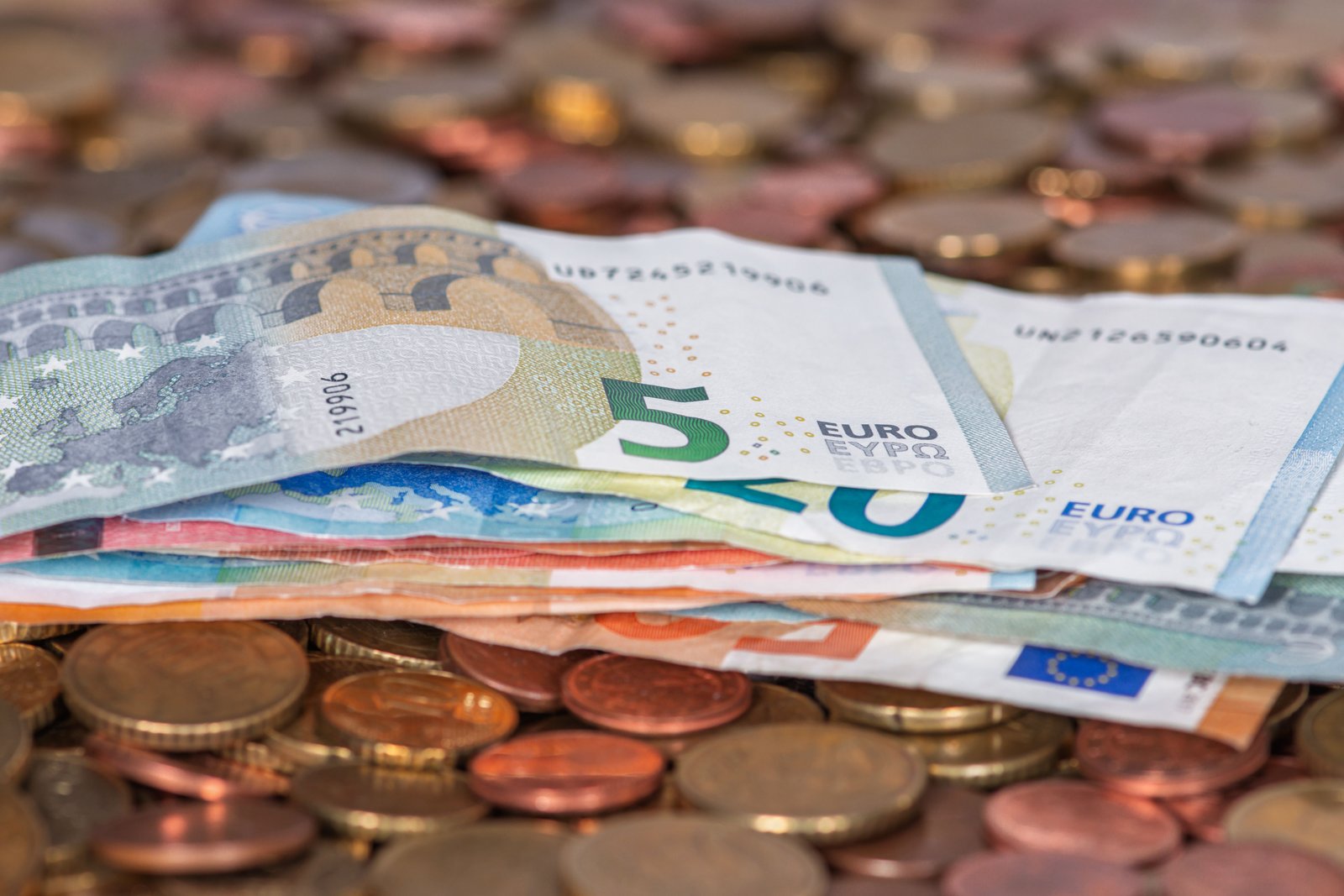
Do you need euros before arriving in France? Should you use a credit card or debit card? And how do you keep access to your money if something goes wrong?
My system is fairly simple: credit card for purchases, debit card for cash, and backups kept separately. A bad experience with an ATM taught me why that last part matters.
This is how my husband and I manage money while traveling in France. It’s written primarily for US travelers, but the same questions are useful wherever you bank.
My France travel money setup
| What I use | What it’s for |
|---|---|
| Credit card without foreign transaction fees | Everyday purchases |
| Debit card linked to a separate travel account | ATM withdrawals |
| Apple Pay | Convenient contactless payments |
| Backup credit and debit cards | Problems with a main card |
| €100–€200 in cash between us | Small purchases and backup spending |
| Banking apps and text alerts | Monitoring activity and managing card locks |
I fund our travel checking account before we leave. The money for everyday bills stays elsewhere.
1. Choose your cards before you travel
Look for a chip-enabled credit card and debit account with no foreign transaction fees, then check the other costs and conditions.
I used a Capital One Venture card for several years and now use Venture X. My debit card is linked to Capital One 360 Checking. I’ve found Capital One straightforward to use, and when I’ve needed customer service from Europe, my experience has been positive.
That’s my experience, not a reason to skip comparing your options.
Before choosing a card, check:
- Foreign transaction fees: For both purchases and cash withdrawals.
- ATM charges: Your bank’s fees and any separate ATM operator surcharge.
- Annual fees: Whether the card’s benefits justify the cost for you.
- Access abroad: Card-network acceptance, withdrawal limits, and customer support.
- App controls: Card locking, transaction alerts, and overseas login arrangements.
Capital One currently states that its 360 Checking account does not add foreign transaction fees, although ATM operators may charge separately. Read the terms for your particular account. Check Capital One’s international ATM guidance.
Check the network on your debit card
My current debit card carries Discover, Diners Club International, and PULSE markings. Don’t assume it uses the same network as an older card.
For France, Capital One directs customers with these cards to look for ATMs displaying Discover or Diners Club International acceptance marks. Check your own card and its current international instructions before leaving. Capital One debit-card travel guidance.
I use my credit card for shopping and keep the debit card for ATM withdrawals.
2. Keep vacation money separate from bill money
About eight years ago, I withdrew cash at a train-station ATM in Nuremberg, Germany.
The following day, another withdrawal was declined because my daily limit had supposedly already been reached. That was my red flag. My card had been cloned, and someone else was withdrawing money.
I reported it immediately. The bank blocked the card and investigated, but my claim was denied. The explanation I received was that my PIN had been used. I wasn’t reimbursed.
Fortunately, the account held only vacation money, not the money needed for our mortgage and everyday bills. I used our backup bank card for cash until we returned home, when the compromised card was replaced.
That experience changed my routine:
- I keep travel funds in a separate checking account.
- I lock cards when I’m not using them.
- I receive text alerts for purchases, withdrawals, and declines.
- We carry backup cards separately.
A separate account limits the balance directly available through that debit card. It doesn’t make the account fraud-proof.
My claim outcome was specific to that incident. It does not mean that using a PIN automatically removes your rights to dispute an unauthorized withdrawal. Report suspicious activity promptly and follow your bank’s dispute process. US consumer guidance on unauthorized transfers.
3. Use credit cards for purchases and carry a little cash
We pay by credit card for most things. Contactless payments are part of our everyday routine in France, and I use Apple Pay almost everywhere we go.
Still, I like having €100–€200 in cash for the two of us. We might use it for a bakery stop, a quick apéritif, or a bottle of water.
That is our comfortable cash reserve, not a daily spending recommendation. Your needs will depend on where you go and how you spend.
Keep a physical card available even if you usually pay by phone. Acceptance, terminals, and phone batteries don’t always cooperate.
Should you get euros before traveling to France?
No. You don’t need to order euros from your bank or exchange dollars at the airport before your trip. You can arrive in France without cash and still get to your hotel.
- Train or airport transport: You can buy tickets by card. I’ve used my credit card for RER tickets from Charles de Gaulle into Paris.
- Official taxi: French taxis must accept card payments. Confirm your destination and that you’ll pay by card before getting in. French government taxi-payment guidance.
- Uber or Bolt: Set up your account and payment method before leaving home so you’re ready to book through the app.
Bring a working card and a backup, and check your airport-transfer plan before departure. Finding euros doesn’t need to be your first task after landing. Once you’re settled, find a suitable bank ATM and withdraw a little cash for your stay.
4. Choose your ATM carefully
I prefer to get settled, find a suitable bank, and withdraw cash there rather than make an airport ATM my first stop.
We check our debit card’s network, look for compatible banks, and use a map to find a convenient branch.
My preference is a bank-operated ATM, ideally inside a branch or vestibule when accessible. An indoor location isn’t a guarantee against tampering, and an outdoor machine isn’t automatically unsafe. I still inspect the machine and read the charges.
My ATM checklist:
- Check compatibility: Look for the network marks your bank specifies.
- Check the operator: Identify who operates the machine.
- Read the fees: Cancel before confirming if the charge is unacceptable.
- Inspect the machine: Don’t use it if the card slot or keypad looks loose, altered, or suspicious.
- Shield your PIN: Cover the keypad as you enter it.
- Check your alert: Review the withdrawal notification and account activity afterward.
Use your debit card for ordinary cash withdrawals. Withdrawing cash on a credit card may be treated as a cash advance, with separate fees and interest.
Choose euros, not US dollars
When a shop terminal or ATM offers to convert the transaction into dollars, I decline that conversion and choose euros.
This avoids accepting the merchant’s or ATM operator’s conversion service, known as dynamic currency conversion. Your card network and issuer then handle the conversion under your card’s terms.
It isn’t a promise of one guaranteed “best” rate, and it doesn’t remove a separately displayed ATM fee. Visa’s guidance on choosing local currency.
At an ATM, declining conversion is different from canceling the withdrawal. Read each screen carefully.
5. Lock your cards, but plan how to unlock them
I lock my cards when I’m not using them and unlock them through the banking app when needed.
There is one important catch: you need a working way to access the app. A locked card is inconvenient if your phone has no connection and you can’t unlock it.
Before departure:
- Test your login: Make sure the banking app works.
- Check verification: Understand how you’ll receive security codes abroad.
- Check your phone plan: Confirm data and text-message arrangements.
- Enable alerts: I use texts for purchases, cash withdrawals, and declined transactions.
- Arrange backup access: Use the bank’s supported options for an additional verified number or an authorized account holder.
For our accounts, I’ve added my husband’s number as a backup, and he also has the app available. Check what your bank supports rather than sharing passwords or assuming another person can access your account.
A card lock is an extra precaution, not a complete freeze. Some recurring or previously authorized transactions may still go through, and digital-wallet behavior varies. Capital One’s explanation of card locks.
6. How I use Apple Pay in France
I use Apple Pay for almost everything in France. I’ve tapped my phone in shops and museums, at highway toll booths and at parking meters. Even in the countryside, I rarely come across a place that doesn’t take contactless payments.
I’ve even used it when I forgot my physical card. If a card is reported lost or stolen, the issuer may suspend or change its digital-wallet access.
My real backup is another card, kept separately.
My husband and I split our backup credit and debit cards between us. Depending on the situation, we use the room safe or a concealed money belt rather than keeping every card together.
We also leave available credit for an emergency. That helps with card purchases, but it isn’t a substitute for having another way to withdraw cash.
If a card disappears or a withdrawal looks wrong
- Lock the affected card immediately if you can.
- Contact the bank through its app or a verified number.
- Report unauthorized activity promptly and keep the case reference.
- Ask what happens next: Replacement options, account access, and any required paperwork.
- Use your separately stored backup, rather than repeatedly trying the compromised card.
Save your banks’ customer-service numbers somewhere you can reach without the affected phone or card.
I’ve kept a photo of the back of a card to preserve the phone number. A better version of that habit is to save just the verified contact details, without retaining a readable security code or other sensitive card information.
My final check before leaving
- Credit card: Ready for purchases, with fees checked.
- Travel debit account: Funded before departure.
- ATM network: Checked for the places we’ll visit.
- Backup cards: Available and stored separately.
- Phone and banking apps: Working, with verification arranged.
- Alerts: Switched on.
- Bank contact details: Saved securely.
- A little cash: Available without carrying the whole trip’s spending money.
I don’t carry our holiday budget around in banknotes. I keep the money accessible, use cards for most purchases, and make sure one lost card won’t bring the trip to a halt.
For estimating how much you’ll need, use my France trip budget guide and free worksheet.
Keep your planning moving.
Plan Your France TripThis is general planning information. Routes, fares and policies can change; check official sources for your travel dates.