You can explore the French Riviera by train without learning the entire French railway system. I’ll help you choose a base that suits your outings, find the right departure station and compare individual tickets with a transport pass. You’ll also learn what to check about ticket validity, how to find your train and how to plan the journey from the arrival station to the place you actually want to visit. Work through one outing at a time, including your return, so the practical details are settled before you set off.
The coastal railway connects Cannes, Antibes, Nice, Villefranche-sur-Mer, Monaco and Menton. That makes it a useful foundation for a trip without a car. The important question is not simply whether a town has a station, but how easily you can get from that station to what you want to do. See the official regional rail map. On the French-language page, click “Voir la carte” (“View the map”). For Riviera journeys, look on the right-hand side for Cannes, Nice-Ville, Monaco-Monte-Carlo and Menton.
1. Decide whether the train fits your trip
Start with your activities, then choose your transport.
The train is worth considering when your plans centre on coastal towns and you would rather avoid driving and parking. A hillside village or a remote accommodation may require a bus, taxi or another connection.
Before adding a destination to your itinerary, check:
- Where you arrive: locate the station on a map.
- Where you want to go: map the route to the beach, old town, attraction or restaurant.
- What the journey involves: include walking, hills, stairs and any onward transport.
- How you return: check your options before committing to an evening reservation.
Planning tip: compare the whole journey from your accommodation to your activity. A short train ride can still involve a substantial walk at either end.
The important exception: Èze village
Important: the train takes you to Èze-sur-Mer, not Èze village. The picturesque hilltop village is farther uphill, so plan your onward transport before getting off the train.
Check the tourist office’s directions to Èze before choosing your route.
2. Choose a base that fits your days
You do not need to change hotels every time you visit another town.
Nice is worth considering if your plans take you both east and west along the coast. Antibes or Cannes may suit a trip focused farther west; Villefranche-sur-Mer or Menton may suit your preferences farther east.
Choose your base by answering three questions:
- Where will most of my outings be? Compare actual journeys from each possible base.
- What do I want nearby on quiet days? Think about beaches, restaurants, markets and evening walks.
- How often will I use the station? Frequent departures make the walk from your accommodation more important.
A waterfront hotel may be exactly what you want, but check its station access before booking. Include the walk with luggage, rather than judging only the distance on a map.
Planning tip: choose somewhere you will enjoy staying even on a day when you decide not to take a train.
3. Choose the right departure station
Search from the station you will actually use, rather than assuming every journey starts at Nice-Ville.
Nice has several railway stations. Depending on your accommodation and journey, Nice-Ville, Nice-Riquier or Nice-Saint-Augustin may be relevant. The tourist office lists all three as departure options for coastal travel to Èze, but you should check the stops of your particular service. See its station guidance.
When comparing accommodation or planning a departure:
- Enter the full station name in your journey search.
- Check how you will reach it.
- Confirm that your selected train stops there.
- Save the station location so you can find it easily.
4. Decide between individual tickets and a pass
Plan your likely journeys before buying a transport pass.
For a few outings, individual tickets may be the simpler choice. For frequent travel, compare the total with the relevant regional passes.
Make a short list of your expected journeys, including returns. Then check:
- Coverage: does the pass include every destination?
- Transport: does it cover trains only, or the buses and trams you need too?
- Duration: do its valid days match your plans?
- Practical details: where do you buy it, and how do you use or validate it?
One option is Pass SudAzur Explore, currently offered for 3, 7 or 14 days across participating train, tram and bus networks in the Alpes-Maritimes and Monaco. Read the official pass information for coverage, exclusions, purchase arrangements and current prices.
Planning tip: a pass can be worthwhile for convenience as well as savings, but do not add outings just to feel you have used it enough.
5. Understand what your regional ticket allows
A coastal TER ticket works differently from a reserved TGV ticket.
The regional operator states that its ordinary TER tickets can be used once for the selected route on the travel day, including on another TER departure that day. Seats are not reserved or guaranteed.
That flexibility can help when you want to spend longer over lunch or leave earlier than planned. It does not turn a single-journey ticket into an unlimited day pass.
Before paying:
- Confirm the stations, date and passengers.
- Read the conditions of your selected fare.
- Arrange your return ticket or suitable pass.
- Save the actual ticket where you can retrieve it easily.
Check the regional ticket FAQ for current rules.
6. Check whether you need to validate anything
Follow the instructions for the ticket or pass you actually bought.
The regional operator says ordinary TER/ZOU! tickets no longer require traditional stamping, known as compostage, apart from a specific student-ticket exception.
A transport pass or local bus and tram ticket may have its own validation requirements. Do not assume that the instructions for one product apply to another.
If you are unsure, show your ticket or pass to staff before boarding. The official regional FAQ explains the TER rules.
7. Build a day you will enjoy
Start with one main destination and one main reason to visit it.
Perhaps you want a beach afternoon, a market morning or time to explore an old town. Choose that first, then build the journey around it. If you’d like a few ready-made options, see 5 Easy Day Trips From Nice by Train.
For each outing, decide:
- Your priority: what would make the day worthwhile?
- Your arrival plan: how will you get from the station to that activity?
- Your return options: which departures suit your day?
- Your optional extra: what could you add if you still have time and energy?
Two towns can work in one day, but compare the extra travel with the time you lose exploring. Keep the second stop optional when possible.
Planning tip: avoid making the final train of the evening your only workable return. Identify an earlier departure and check what alternatives remain if plans change.
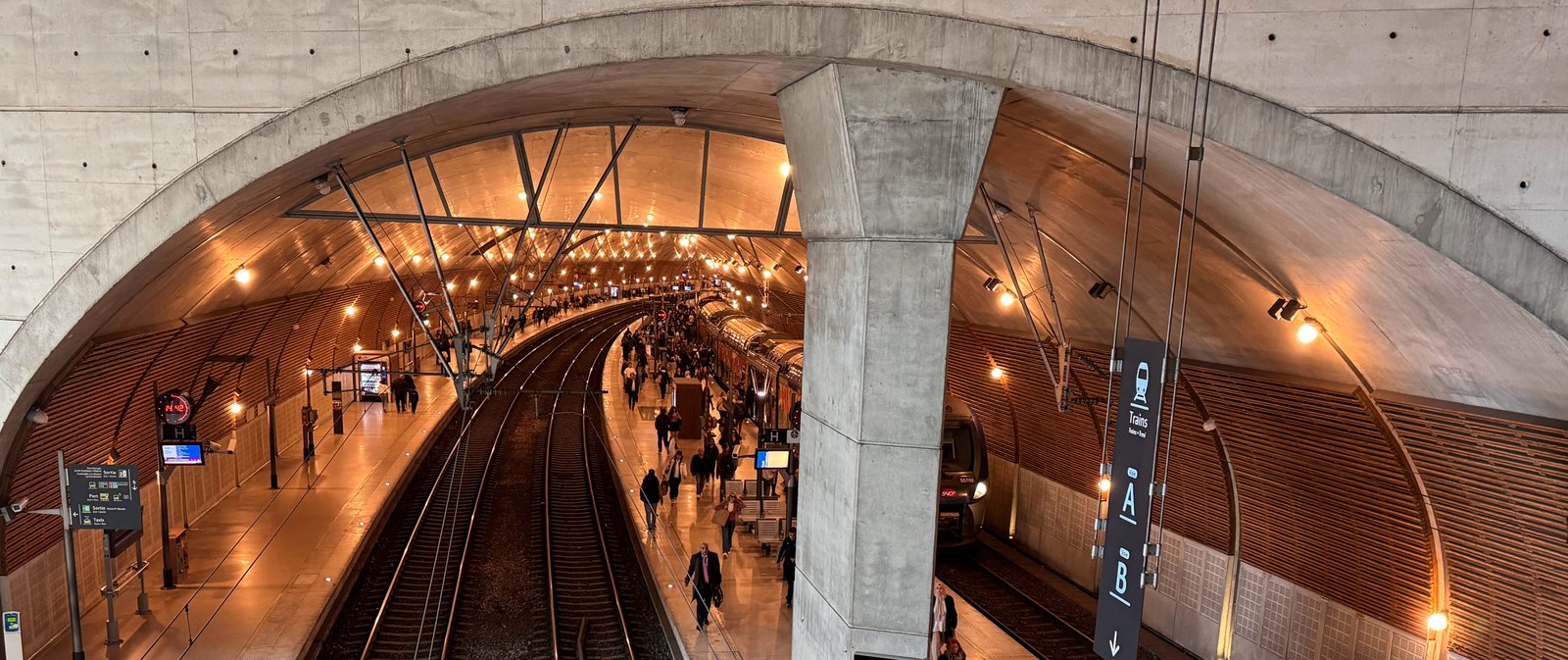
8. Know what to do at the station
You only need to identify your train, find its track and keep your ticket accessible.
- Check the departure board. Look for Départs, then match your train number and departure time.
- Check the stops. The displayed destination may be beyond the town where you are getting off.
- Find the track. Voie means track; follow the station signs and watch for changes.
- Keep your ticket ready. Carry any required identification and keep your phone charged.
If the information is confusing, show your ticket to a member of staff. You do not need to guess.
For more help with platforms, luggage and boarding, see the France by Train practical guide.
If this is your first French train journey, start with Taking the Train in France for the First Time.
9. Recheck the journey before you leave
Your itinerary is the plan; current transport information tells you whether it still works.
Check your outward and return journeys shortly before travelling, particularly during engineering work or disruption.
Use SNCF Connect or the official regional transport website to confirm the service. Check any onward bus separately.
Before leaving your accommodation, have:
- Your ticket or pass.
- Your departure station and intended stop.
- A saved route from the arrival station to your activity.
- A return plan with some flexibility.
Start with one straightforward outing. Once you have found the station, boarded the train and returned successfully, you will have a practical routine to use for the rest of your trip.
Keep your planning moving.
See the Train GuideThis is general planning information. Routes, fares and policies can change; check official sources for your travel dates.